
Fictify: Romace Novels&Stories
VitalTek, Inc.Books & Reference
4.777.00 Reviews
- Version
- 5.9.9
- Installs
- 50.00K
- Age Rating
- Mature 17+
Screenshots

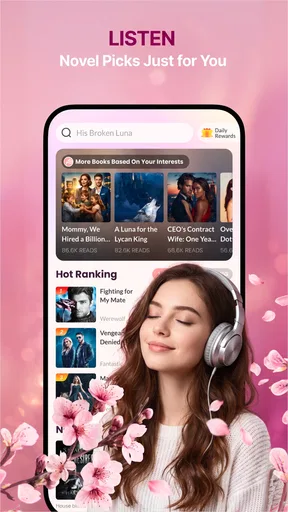
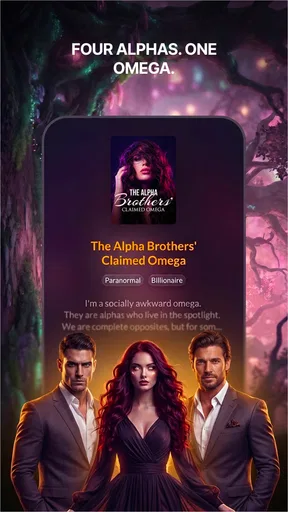


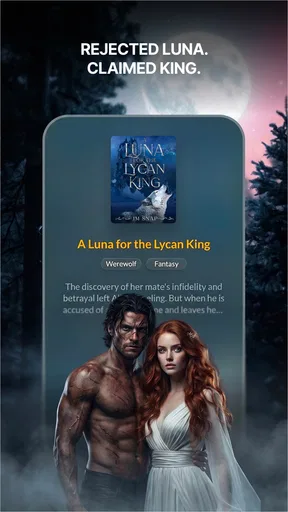
Our Review of Fictify: Romace Novels&Stories
 Analysis by Appyee
If I were choosing a mobile reading app for romance fiction, I would begin with one question: do I want a carefully curated reading library, or do I want a steady stream of stories that I can explore whenever I have a few spare minutes? Fictify: Romace Novels&Stories is aimed firmly at the second experience. It is a free Books & Reference app from VitalTek, Inc. built around romance stories, chapter-based reading, and a changing supply of new material.
That focus makes the app easy to understand, but it also makes the decision more personal than a simple “free or paid” comparison. I found it most appealing when I wanted something light, immediate, and easy to pick up again later. I was less convinced when I wanted a polished digital bookshelf, a literary classic, or a reading environment with the organization tools associated with dedicated ebook services. The real choice is between discovery and control.
The app is free to install, with optional in-app purchases ranging from forty-nine cents to $34.99 per item. It carries a Mature 17+ content rating, so I would not treat it as a general family reading app. Its current version is 5.9.9, and it runs on Android 6.0 or later. Those details matter because the experience is designed for readers comfortable with contemporary romance themes and with the possibility of optional paid access inside a free reading service.
How I would decide whether Fictify fits my reading habits
When I’m deciding whether this kind of reading app belongs in my routine, I look beyond the first appealing story and ask what would bring me back on an ordinary week. I’d weigh how often I want romance fiction, how comfortable I am with chapter-by-chapter reading, and whether browsing feels like a treat or a distraction. That gives me a practical way to judge its staying power before considering its particular strengths and trade-offs.
Start with the kind of reading you actually do
Fictify makes sense for readers who enjoy moving between romance plots rather than committing to one author or one long series at a time. If you like browsing by mood, sampling a premise, and returning to a chapter-based story during short breaks, the format is a natural fit. I can imagine using it on a commute, before sleep, or while waiting for an appointment, when opening a large ebook feels like more effort than I want.
It is also useful for readers who have already finished the books stored on their phone and want something new without immediately buying another title. The app’s central appeal is variety: thousands of free romance stories create a large discovery pool, while new stories arriving daily give the home experience a sense of movement. That does not guarantee that every story will suit my taste, but it reduces the feeling of having exhausted the catalog after a weekend of reading.
On the other hand, I would hesitate to recommend it to someone who mainly reads nonfiction, reference books, literary fiction, or a small number of known authors. The Books & Reference category describes its store placement, but the actual reading identity is much narrower. This is a romance-first service, not a broad digital library. If romance is only an occasional interest, a general ebook app may be a better use of storage and attention.
Think about tolerance for serialized reading
The chapter structure changes how I approach a story. Instead of expecting the complete, uninterrupted experience of a conventional ebook, I have to be comfortable stopping at chapter boundaries and deciding whether the next part is worth continuing. That can be enjoyable because it creates a regular rhythm, but it can also make the reading experience feel less self-contained.
Before settling into Fictify, I would ask myself whether I enjoy cliffhangers. Serialized romance often depends on anticipation, and a reader who dislikes waiting or being interrupted may find the format frustrating. Someone who enjoys returning to a story every day, however, may appreciate the routine. The app’s promise of fresh stories is especially attractive for that kind of reader, because it turns browsing into a recurring habit rather than a one-time download.
A practical tip is to treat the first few stories as a sampling period rather than immediately investing in one. Read enough to judge the writing style, pacing, and emotional tone. This is more important here than it would be with a book purchased from a familiar author, because a large catalog can contain many different approaches to romance. I would rather spend a little time learning my preferences than unlock chapters simply because the opening premise sounded promising.
Age rating and personal comfort should come first
The Mature 17+ rating is not a minor label to overlook. It signals that the app is intended for adult readers, and I would consider that before installing it on a shared family device or recommending it to a younger reader. Parents looking for age-appropriate fiction should choose a service designed for that audience instead.
For adults, the rating still leaves room for personal judgment. Romance readers do not all want the same level of intensity, and a story that feels entertaining to one person may feel uncomfortable or too explicit to another. I would use the opening chapters and the app’s story presentation to decide whether a title fits my boundaries instead of assuming that every romance story will have the same tone.
What the user numbers suggest, without treating them as a guarantee
Fictify has an average rating of 4.7 from roughly 377 ratings, along with 77 written reviews. It has also passed 50K installs. I see that as a useful sign that the app has found an audience, especially among readers who want mobile romance fiction, but I would not use popularity as a substitute for checking whether its reading style matches mine.
Ratings can reflect enthusiasm for the catalog, the convenience of the format, or the appeal of discovering free chapters. They do not tell me whether I will enjoy a particular story or whether I will be comfortable with optional purchases. I would read the written feedback for clues about the day-to-day experience, then make my decision based on my own reading preferences rather than the score alone.
Where Fictify is strongest, and where another reading option may be better
I see the best fit here as a reader who values easy romance discovery more than building a permanent, carefully organized library. In the next section, I’d compare that use with situations where a conventional ebook service or a more social reading community is likely to feel more satisfying, so the choice comes down to the kind of reading experience I actually want to maintain.
Its biggest win is low-friction romance discovery
The strongest part of Fictify is the way it lowers the effort required to find something to read. A traditional ebook store often asks me to search by author, title, or genre, make a purchase decision, and then commit to a book. Fictify’s romance-centered approach is more casual. I can browse, sample, and change direction when a story does not hold my attention.
That matters in real life. Imagine finishing work with ten minutes before dinner, opening the app, and reading a few chapters while waiting for water to boil. I do not need to remember which novel I was planning to buy or spend time comparing editions. If the story works, I can continue later; if it does not, another option is available. This is a better fit for fragmented reading than a service built around long, deliberate purchases.
The daily arrival of new stories also gives the app a useful sense of renewal. I would not rely on that promise as a reason to read every day, but it helps prevent the catalog from feeling static. For a reader who likes romantic plots more than collecting specific books, that ongoing discovery is probably more valuable than advanced library management.
Free access is helpful, but it requires attention
Calling the app free makes it approachable, particularly for readers who want to test the experience before spending anything. I like that the initial decision does not require buying a complete book. That makes Fictify easier to try than a conventional store where every interesting title may lead directly to a purchase.
The trade-off is that optional purchases can become part of the reading decision. Items range from $0.49 to $34.99, so the difference between casually sampling stories and paying for continued access can be significant. I would recommend setting a personal spending limit before unlocking chapters. A small purchase may feel harmless in isolation, but repeated decisions across several stories can change the total quickly.
My preferred workflow would be simple: read free material first, note which stories genuinely hold my attention, and only then consider paying for more chapters. I would also avoid unlocking several unfinished stories at once. Concentrating on one story makes it easier to know what I am paying for and reduces the chance of collecting chapters I never return to.
Why a conventional ebook app may suit some readers more
If I already know the authors I want, a mainstream ebook store may be more efficient. Those services are generally better suited to buying a complete title, keeping a permanent personal library, and reading without the feeling that access is divided into stages. I would choose that route for a holiday read, a book club selection, or an author whose work I specifically want to own.
Fictify is also not my first choice for readers who need a broad reference collection. Someone looking for manuals, biographies, academic material, or practical guides would be better served by an app organized around those needs. The romance specialization is a strength only when romance is the reason I am opening the app.
There is another important distinction between Fictify and user-generated reading communities. A community platform may appeal more to readers who want comments, social interaction, or the feeling of following individual writers. Fictify’s appeal, as I experienced it, is the reading stream itself. If discussion and community participation are central to your enjoyment, compare those priorities before switching.
The hidden trade-off: convenience versus attachment to a single book
A large selection sounds universally positive, but abundance can make it harder to choose. I sometimes spend more time deciding what to start than reading the first chapter. My solution is to use a narrow mood rule: choose one story based on the kind of romance I want that day, give it a fair sample, and abandon it without guilt if the pacing does not work.
This approach is more effective than trying to inspect everything. It also protects against a common problem with discovery-focused apps: confusing novelty with quality. A new title can be interesting simply because it is new. I would judge it by whether the characters, conflict, and pacing keep me engaged after the initial premise.
The chapter format creates a second trade-off. It is convenient for short sessions, but it may interrupt the emotional flow of a story. If I am deeply absorbed, stopping to deal with an unlock or a chapter boundary can feel more intrusive than turning a page in a complete ebook. Readers who value uninterrupted immersion should keep that difference in mind.
Switching from another reading app is easy technically, but not emotionally
Moving to Fictify does not mean abandoning every other reading habit. I would use it alongside a conventional ebook app rather than replacing one immediately. The two serve different purposes: one can hold books I deliberately selected, while Fictify can provide casual romance discovery for spare moments.
The real cost of switching is losing continuity. If I have built a carefully organized library elsewhere, Fictify will not automatically provide the same sense of ownership or collection management. I would also need to remember which stories I started and which ones deserve my attention, especially if I browse widely. A short note in my phone or a simple personal rule—one active story at a time—can prevent the catalog from becoming overwhelming.
There is also a financial adjustment. Readers used to paying once for a complete ebook may dislike making smaller, repeated purchases. Readers used to free serialized fiction may find the model familiar, but should still watch their total spending. I would not switch because the app is free alone; I would switch because its discovery style solves a problem I actually have.
Who should skip it
I would skip Fictify if I wanted a quiet, distraction-free reading environment with one complete novel and no temptation to browse further. I would also skip it if I were shopping for children, studying from reference material, or looking for a specific established title. In those situations, a focused ebook reader, library service, or specialist reference app would likely be more suitable.
I would be cautious if I dislike mature romance themes, dislike serialized cliffhangers, or find optional chapter purchases stressful. None of those concerns makes the app poor; they simply point to a mismatch between the product’s design and my expectations. The best alternative is the one that removes the friction I personally notice most.
My recommendation after weighing the trade-offs
I recommend Fictify to adult romance readers who want a large stream of stories, enjoy sampling unfamiliar titles, and read in short sessions throughout the day. Its free entry point makes experimentation straightforward, and the romance-only focus keeps browsing more relevant than it would be in a general reading catalog. The combination of free stories and daily discovery is its clearest advantage.
I would approach the optional purchases deliberately rather than impulsively. Read first, identify the stories that genuinely earn more of your time, and decide on a budget before unlocking chapters. That habit makes the app feel like a flexible reading companion instead of a sequence of small spending decisions.
For me, Fictify works best as a second reading destination: a place for spontaneous romance fiction when I do not have a particular book in mind. It is not the replacement I would choose for a complete ebook library or a broad reference collection. If that distinction matches your habits, Fictify: Romace Novels&Stories is worth trying as a low-commitment way to discover your next romance read.
VitalTek, Inc. has positioned the app clearly, and the current 5.9.9 release supports its role as a dedicated mobile reading option for adults. I would install it when I want variety, keep my expectations realistic about serialized reading and purchases, and use another service when ownership, specific authors, or uninterrupted books matter more than discovery.
Verdict
Strengths of Fictify: Romace Novels&Stories
- Large library of romance stories across popular subgenres
- Personalized recommendations help discover books matching your tastes
- Offline reading is convenient for travel or limited connectivity
- Simple interface makes browsing chapters and titles easy
- Regularly updated content can keep frequent readers engaged
Limitations of Fictify: Romace Novels&Stories
- Some stories or chapters may require coins, subscriptions, or in-app purchases
- Ad interruptions can affect the reading experience for free users
- Story quality and editing may vary between different authors
- Offline access may be limited for certain titles or account types
- The app may collect reading and usage data for personalization
Other Releases by VitalTek, Inc.
View All
Readict -One Click Away Novels
Books & Reference4.6

Readict Fiction
Books & Reference4.7
Similar Picks in This Category
View All
Google Play Books & Audiobooks
Google LLC4.7

네이버 - NAVER
NAVER Corp.3.5

Wattpad - Read & Write Stories
Wattpad.com3.7

King James Bible - Verse+Audio
Ozion4.8

Bible Offline-KJV Holy Bible
Bíblia Offline4.9

Amazon Kindle: Reading App
Amazon Mobile LLC4.8
Frequently Asked Questions
What is Fictify: Romance Novels & Stories?
Fictify: Romance Novels & Stories is a reading app focused on romantic fiction, serialized novels, and character-driven stories. After exploring the app, I found that it is designed for readers who enjoy genres such as contemporary romance, drama, fantasy romance, and relationship-based fiction. Stories are generally presented in episodes or chapters, making it convenient to read gradually rather than finishing an entire book in one sitting.
Is Fictify: Romance Novels & Stories free to download and use?
The app can generally be downloaded without an upfront purchase, but access to all of its content may not be completely free. Some stories, chapters, or reading features can require in-app currency, subscriptions, advertisements, or other purchases. Before downloading, users should review the current pricing and payment information shown in the Google Play Store or App Store, since available plans and restrictions may change over time.
Does Fictify require an internet connection to read stories?
An internet connection is normally recommended because the app may need to load story chapters, update your reading progress, display advertisements, synchronize account information, and process in-app purchases. Depending on the title and the version of the application, some chapters might be available for temporary offline reading after being loaded. However, users should not assume that every story or feature works offline without checking the app’s own download options.
What types of romance stories are available on Fictify?
Fictify is aimed at readers with varied romantic-fiction preferences, offering stories that may include contemporary relationships, emotional drama, suspense, fantasy elements, complicated family situations, and slow-burn romances. The catalog can change as new chapters and titles are added. Because individual stories may contain mature themes, conflict, or emotionally intense situations, readers should check descriptions, categories, and content notices before choosing a novel.
Is Fictify suitable for children and younger teenagers?
Fictify should not automatically be considered a children’s reading app. Romance stories can include mature relationships, suggestive situations, strong emotional themes, violence, or other content that may not be appropriate for younger users. Parents and guardians should check the age rating listed on the relevant app store and review the application’s content before allowing a child to use it. Device-level parental controls are also recommended where appropriate.
